Key Assessment Guide for General Neuromuscular Disorders
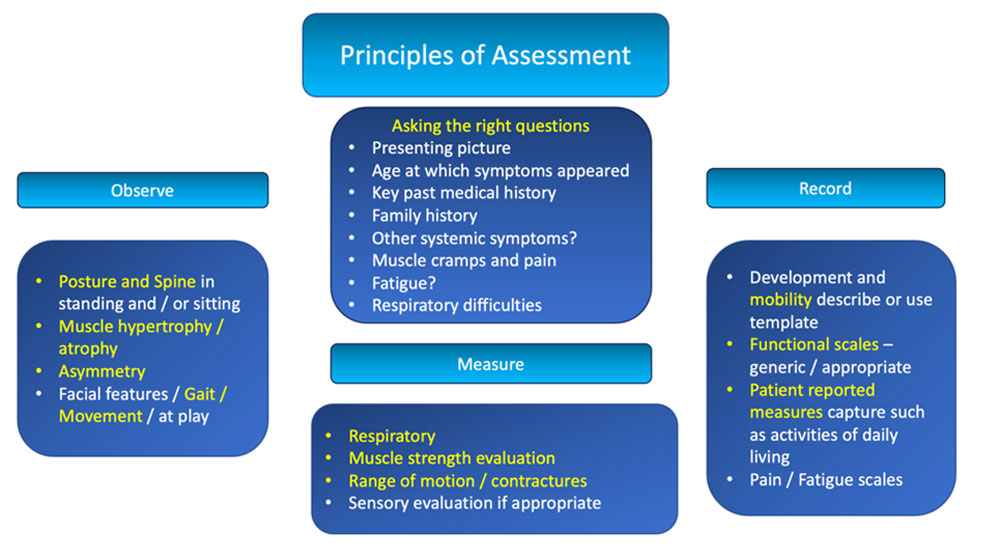
Principles of Assessment for General NMD
For individuals where an NMD disorder has been identified, but perhaps not diagnosed, it is their concerns and symptoms that will drive your assessment and help you prioritise which assessments might be useful.
Where a diagnosis exists, disease-specific assessments may be available, and they are outlined under the appropriate sections. Assessment is the key to unlocking effective and efficient management and maximising independence and function for individuals with NMD.
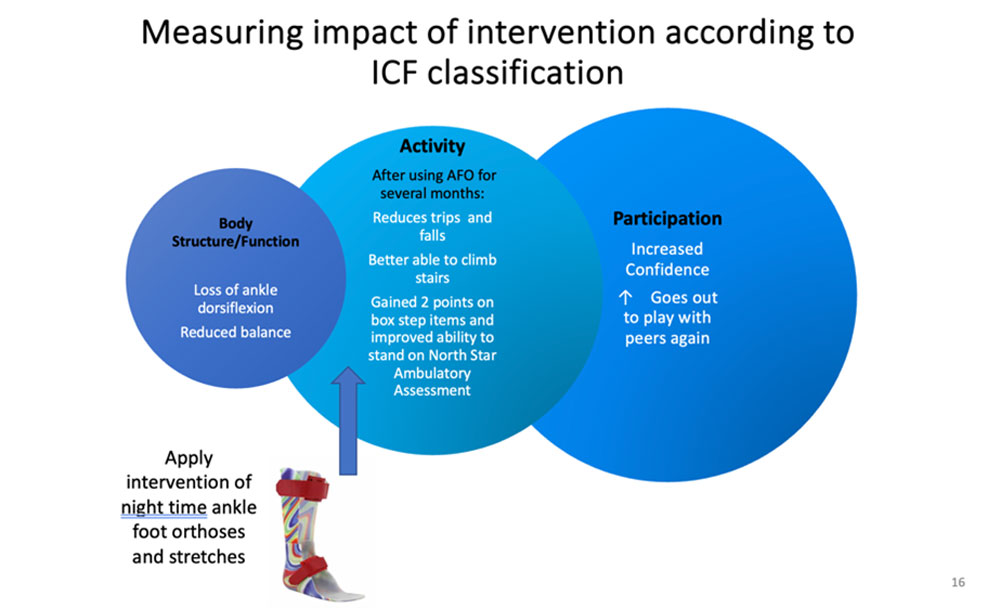
Assessments can be categorised according to the World Health Organisation International Classification of Functioning, Disability & Health Framework (WHO, 2001) of Body Functions & Structure: measures of muscle strength and weakness, posture, range of motion, respiratory function, pain and fatigue; Activities: measures of motor performance, gait, activities of daily living; Participation: Impact on home, work and social participation.
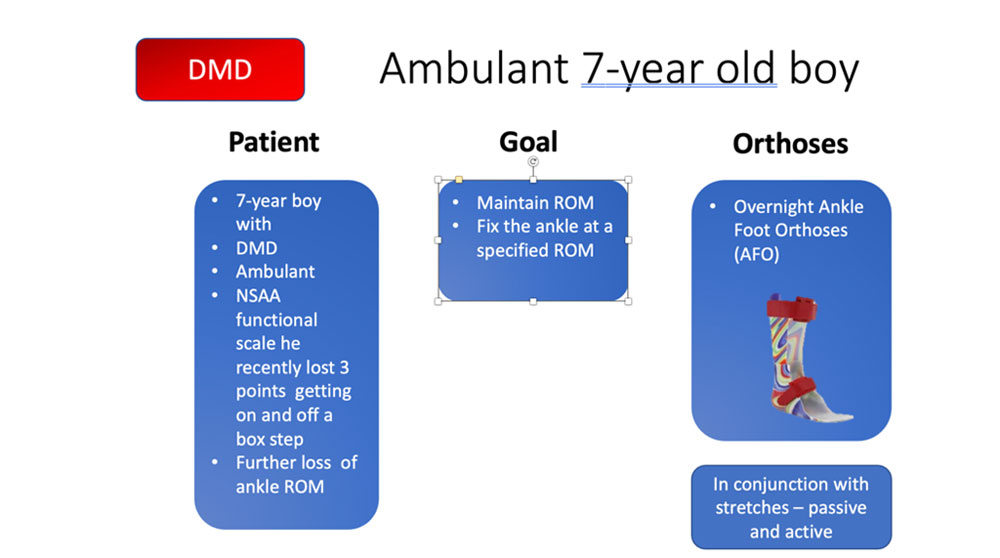
This structure can guide you to appropriate evaluation. For example, identifying a loss of range of motion in an ankle and loss of muscle strength (structure) has led to a loss of functional ability to walk normally (activities) which has impacted ability to walk during work and going out with friends (participation). Your management can then be driven by your clinical assessment and patient reported changes. See example button below.
Useful reference material regarding assessment of NMD in general as well as disease-specific assessments can be found in several key texts and documents.
If you do not have a diagnosis:
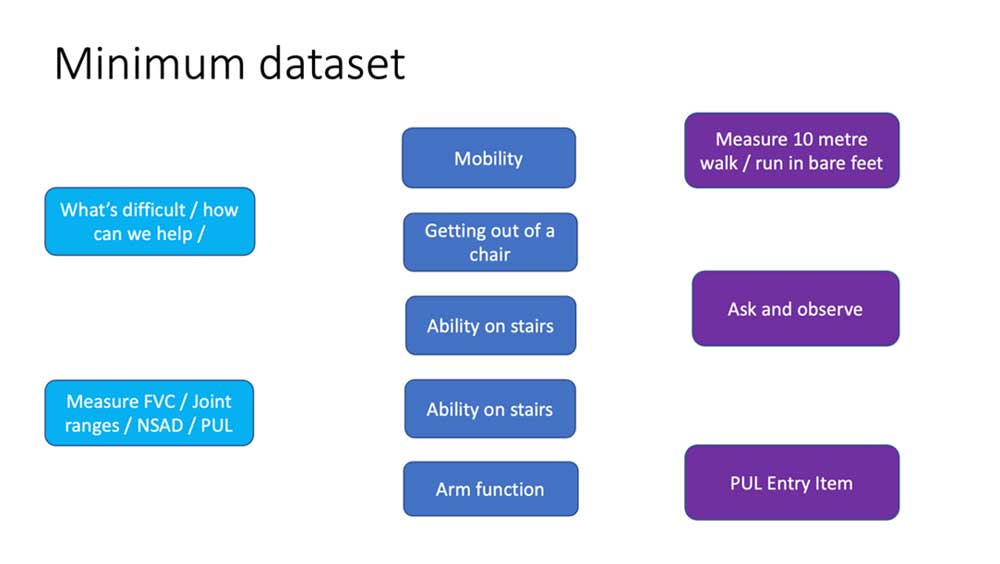
- In ambulant subjects start with a simple summary of function test, or if you have more time the NSAD.
- If arm function is a particular issue, you could use the PUL entry item as a summary or the full PUL.
- In non-ambulant individuals the EK2 scale can be a useful evaluation to guide management
- To capture activities of daily living you could use the ACTIVLIM.
- Additional assessments will depend on the issues raised by the individual and commonly include an assessment of respiratory function, range of motion, posture, and pain and activity as well as an all-important understanding of how they are managing at home.
Resources
Neuromuscular Disorders in Children A Multidisciplinary Approach to Management. 2019 Ed Nicolas Deconinick and Nathalie Goemans
NMD Adults Textbook guide coming soon!
Example of ICF classification in assessment & management: