Introduction to Glycogen Storage Diseases
What are Glycogen Storage Diseases?
Glycogen is a stored form of glucose which is a major source of energy for the body. It is stored in the form of glycogen in both the liver and muscles and later released with the help of enzymes.
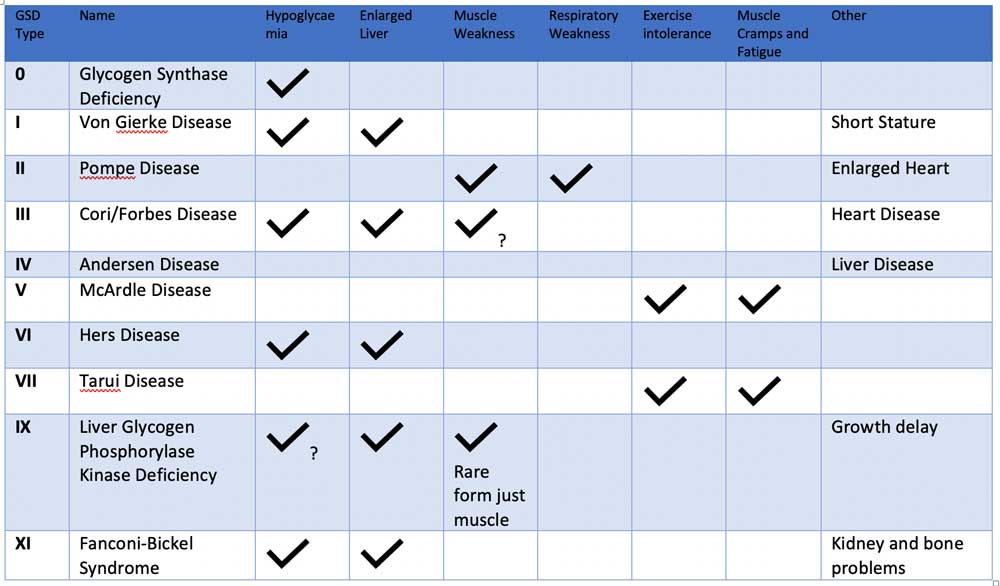
Persons affected by Glycogen Storage Disease (GSD) have an inherited defect in one of the enzymes responsible for forming glycogen, or for releasing glucose from glycogen as it is needed by the body during activity and/or between meals. There are currently ten main types of GSD, and they are described in detail on the Association for Glycogen Storage Disease -UK website (AGSD-UK)
GSDs are a group of inherited diseases. They result from a problem with one of the proteins (known as enzymes) involved in the conversion of glucose to glycogen, or the breakdown of glycogen back into glucose.
They mostly tend to affect your liver and muscles and symptoms include weakness, tiredness and low blood sugar levels. GSDs are rare, it is estimated that about one in every 20,000 to 40,000 babies born has a glycogen storage disorder. Most have autosomal recessive inheritance.
Almost all GSDs occur when a child inherits the affected gene from both parents, in a pattern called autosomal recessive inheritance. We all have two copies of genes, and each parent passes on one of their copies to a child. For a child to be affected, both parents need to carry and pass on the faulty gene (which is why it is so rare). If both parents are carriers the chance of each one of their children being affected is 1 in 4. Someone who is a carrier of a GSD normally has no symptoms of the condition.
The exception to this inheritance pattern is GSD9, for which the sub-types can have other inheritance patterns such as X-linked recessive.
Pompe is an autosomal recessively inherited lysosomal storage disorder caused by mutations in the gene coding for acid α-glucosidase (GAA). This is an enzyme and can be found in all organs and when it is not present in normal levels is associated with a large range of clinical symptoms.
Presentation varies and is on a large continuum. Severity depends on how early it presents and how rapidly it progresses. Early presentation is generally associated with more rapid progression. So, at one end of the scale, it can be severe and significantly affect cardiac muscle and cause severe muscle weakness. This form can be life-limiting during the first two years of life. It can be significantly milder and characterised by a progressive myopathy and deteriorating respiratory function which becomes evident in adults as is defined as later onset disease.
Currently there are no therapies that treat the cause of the disease; however, Enzyme replacement therapy (ERT) has improved survival for babies with the severe infantile form of the disease and stabilises function in childhood onset and adult-onset forms of the disease.
- Glycogen storage disease type II
- Acid maltase deficiency (AMD)
- Acid alpha-glucosidase (GAA) deficiency
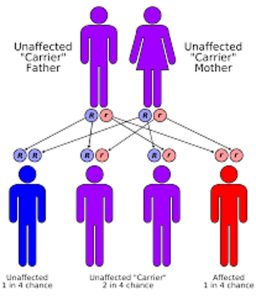
Pompe vacuoles:
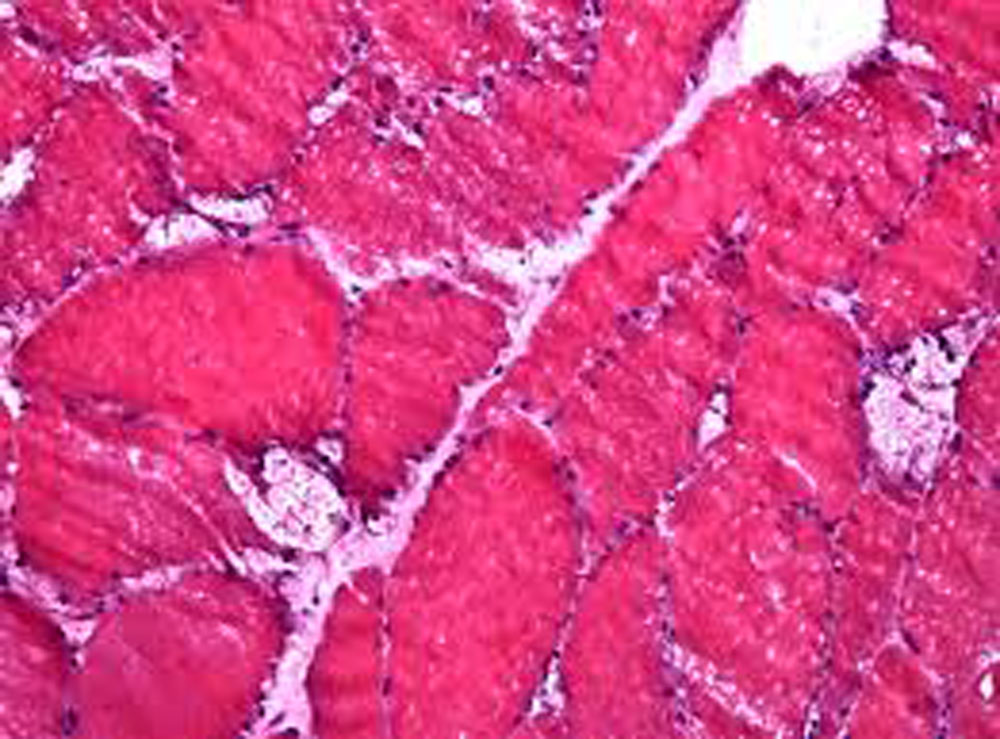
Some conditions can only be inherited in an autosomal recessive pattern. This means the condition can only be passed on to a child if both parents have a copy of the faulty gene – both are “carriers” of the condition.
If the child only inherits one copy of the faulty gene, they’ll be a carrier of the condition but won’t have the condition.
If a mother and a father both carry the faulty gene, there’s a one in four (25%) chance of each child they have inheriting the genetic condition, and a one in two chance (50%) of their child being a carrier.
Lysosomes are membrane bound vesicles within every cell that contain hydrolytic digestive enzymes.
Myopathy refers to a clinical disorder of the skeletal muscles. Abnormalities of muscle cell structure and metabolism lead to various patterns of weakness and dysfunction
Infantile form: is due to a total lack of the acid a-glucosidase (GAA) and a huge build-up of glycogen in skeletal and cardiac muscle.
- This group are the most severely affected. It usually presents within the first three months of life with rapidly progressive symmetrical muscle weakness (floppy infants) and respiratory insufficiency.
- It is also associated with hypertrophic cardiomyopathy (thickening of the walls of the heart) which impairs cardiac function. A combination of these issues leads to cardio-respiratory failure within the first 2 years of life.
- Many infants present with a large, protruding tongue and a flattened posture in supine. The legs may feel firm on palpation due to pseudo-hypertrophy.
- This pattern of weakness leads to postural tendencies which can result in muscle tightness and joint contractures particularly of the hips (abduction and external rotation), knees and feet (plantar flexion and varus). Arms fall into pronation with flexion of the wrist and fingers.
- They may have feeding and swallowing problems as well as respiratory difficulties. This can lead to respiratory tract infections.
- Developmental milestones are delayed or not even achieved. This includes rolling supine and prone, sitting, and standing. However cognitive development is usually normal.
- Most infants experience hearing loss.
Late onset Pompe disease is due to a deficiency in GAA rather than a total absence, but it does also progress. It includes those who present in childhood as well as those who present as adults. Early presentation is usually associated with more rapid progression.
- Muscle weakness is more evident in the proximal muscles and can present in respiratory muscles as well (diaphragm and intercostal muscles). Lower limbs are affected more than upper limbs (adductor involvement is high leading to a swaying gait pattern) but involvement is extremely variable. Weakness in the trunk can also occur and if this presents before puberty it can lead to scoliosis.
- Depending on the pattern of muscle weakness muscle tightness and contractures may become evident.
- Patients may not always retain ambulation.
- Other symptoms can include chewing and swallowing difficulties and drooping of the upper eyelids (ptosis).
- Smooth muscle involvement may impact digestion.
Resources
A key source of information for therapists and for patients is Association for Glycogen Storage Disease UK. www.agsd.org.uk
10 main types: