• Skip to primary navigation
  • Skip to main content
  • Skip to primary sidebar
  • Skip to footer
POD-NMD Logo

Pod NMD

  • Who We Are
    • Our Team & Governance
    • Partnerships & Collaborations
  • Resources by Condition
    • Becker Muscular Dystrophy (BMD)
    • Congenital Muscular Dystrophy (CMD)
    • Congenital Myasthenia Syndrome (CMS)
    • Congenital Myopathies (CM)
    • Duchenne Muscular Dystrophy (DMD)
    • General Neuromuscular Diseases (NMD)
    • Glycogen Storage (GSD)
    • Inherited Neuropathies
    • Limb Girdle Muscular Dystrophy (LGMD)
    • Myotonic Dystrophy (DM1)
    • Spinal Muscular Atrophy (SMA)
  • Assessment
    • Motor Performance
    • PROMS
    • Timed Tests
    • Additional Considerations
    • Assessing Babies and Young Children
    • Summary of Function Scales
  • Managing NMD
    • Staying Active & Stretches
    • Managing Other Symptoms
    • Multidisciplinary Care
    • Occupational Therapy
  • CPD Resources
  • Podcasts
    • Duchenne Muscular Dystrophy (DMD)
    • Inherited Neuropathies
    • Limb Girdle Muscular Dystrophy (LGMD)
    • Other
  • Search

Intro to DMD

/ Resources by Condition / Intro to DMD

Introduction to Duchenne Muscular Dystrophy

Duchenne muscular dystrophy (DMD) is a muscle-wasting condition (neuromuscular disorder) caused by a mutation in the dystrophin gene leading to an absence of a type of protein called dystrophin in the muscle fibres. It usually affects only boys.  

Manifesting carriers

It is exceptionally rare for girls to have Duchenne, although not unheard of. But girls and mums of DMD boys / young men, in particular, can be “manifesting carriers” i.e., they can have calf hypertrophy, which is often asymmetrical, some weakness, difficulty getting off the floor and managing stairs, muscle aches and cramps.

In severe cases girls, like boys, can lose ambulation. They may be asymptomatic or present more like a Becker muscular dystrophy (milder phenotype) and present with muscle cramps and mild weakness or motor difficulties. It is important to assess them using similar techniques as with Duchenne muscular dystrophy, but you may need to include some higher functional abilities such as rising through half-kneeling or ability to squat. (These are items which can be found in the NSAD – which is primarily for assessing children and adults with a limb girdle muscular dystrophy).

Take note if a mother is a manifesting carrier and ask her about any difficulties that she may have. This can affect what she is able to do for her child, and more emphasis may have to be placed on management at nursery or school.

Key message – it is important for therapists to know that mothers will need monitoring for potential cardiac issues. They do present in our clinics and may show signs of muscle weakness later in life. It can be useful to perform manual muscle testing and assess function in this group.

How many people have Duchenne?

About 100 boys are born in the UK each year with Duchenne muscular dystrophy, and there are about 2,500 boys and young men known to be living with the condition in the UK at any one time.
For the general population, the risk of having a child with Duchenne muscular dystrophy is about one in every 3,500-5,000 male births.

Duchenne muscular dystrophy is a serious condition that causes progressive muscle weakness. Owing to the lack of the dystrophin protein, muscle fibres break down and are replaced by fibrous and or fatty tissue, causing the muscle to weaken gradually.

A milder phenotype exists called Becker muscular dystrophy where some dystrophin is expressed in the muscle, but it is not fully expressed. It presents as a milder disease but is still progressive. A higher function may be achieved but muscle weakness does occur in the same pattern as with Duchenne muscular dystrophy (proximal to distal progression) and muscle cramps in the calf muscles and thighs are quite common.

What is the genetic background to Duchenne?

Duchenne muscular dystrophy is a genetic condition – it is caused by a mutation in the genetic code (DNA).

In Duchenne muscular dystrophy, the mutation occurs in a gene called dystrophin, which is located on the X chromosome or sex-chromosome (girls have two X chromosomes and boys have only one). In just over half of cases, the condition is inherited from the mother who is a ‘carrier’, but it can also be caused by a new mutation in the child’s genes.

If a woman carries the mutation, then she is known as a ‘carrier’. Usually, female carriers are not affected because they have a second X chromosome, from which the dystrophin protein can be produced. A small number of female carriers have a degree of muscle weakness themselves, and they are known as ‘manifesting carriers’.

Each son of a carrier has a 50:50 chance of being affected, and each daughter has a 50:50 chance of being a carrier. Genetic advice (counselling) and testing for other family members at risk of being carriers, should be provided as soon as possible following the diagnosis of a boy with Duchenne muscular dystrophy.

How is Duchenne muscular dystrophy diagnosed?

Most boys with Duchenne muscular dystrophy are not diagnosed until they start displaying symptoms, unless there is someone else in the family with the condition.

The first signs of Duchenne muscular dystrophy usually appear between the ages of one and three years and usually consist of problems with muscle function – see Diagnosis and Management of DMD Video in the resources section below.

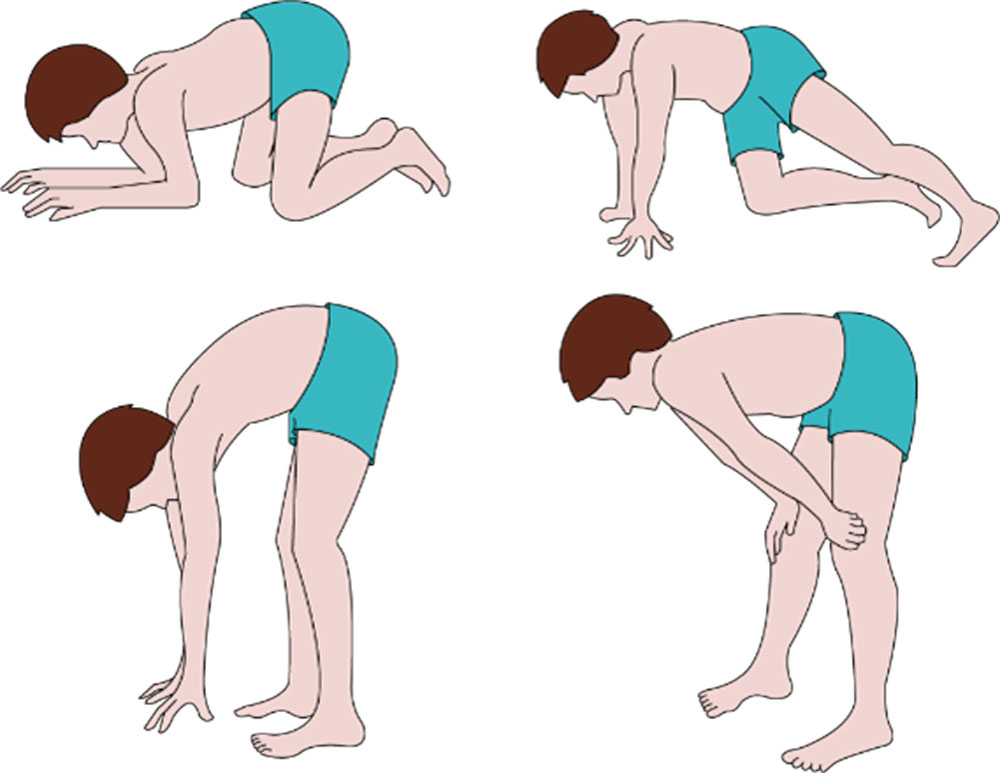
Boys might start walking later than their peers, can fall more often or show difficulty running, jumping or getting up from the floor. They might have enlarged calf muscles. Some boys with Duchenne muscular dystrophy have delayed speech development and this can be the first sign of the condition.

The first indication, which may be tested by local or specialist services, is an extremely elevated level of a protein called creatine kinase (CK) which is an indicator of muscle damage and is often a value in the 1000’s as opposed to normal CK values (generally up to 250 U/L (units per litre)). If a blood test is done, high levels of a protein called creatine kinase (CK) are seen, which may be indicative of Duchenne muscular dystrophy and would require further investigation by a specialist service.

Duchenne muscular dystrophy must be confirmed by genetic testing usually on a blood sample. Different types of genetic tests can provide specific and more detailed information about the DNA mutation.

Genetic confirmation is crucial. It enables families to make decisions about prenatal diagnosis in future pregnancies and for genetic testing to be available to other family members at risk of carrying the mutation in the dystrophin gene. Moreover, the genetic diagnosis will assist in determining if the boy qualifies for a number of clinical trials, which are currently running or are planned. Muscle biopsies are no longer required for diagnosis.

Physiotherapy and occupational therapy are very important in helping people with Duchenne muscular dystrophy (DMD) move and live well for as long as they can.

That’s why DMD Care UK’s therapy working group has launched two new guidance documents – one for healthcare teams and one for people with DMD and their families which give information about the best standards of physiotherapy and occupational therapy care needed at different stages of the disease.

You can read more about it and download a copy here:
DMD Care UK’s new guide to help you get the best standards of physiotherapy and occupational therapy care at every stage of DMD | Duchenne UK

Resources

  • POD-NMD LMS Video: Early diagnosis and management of Duchenne Muscular Dystrophy 
  • MDUK pdf on manifesting carriers 
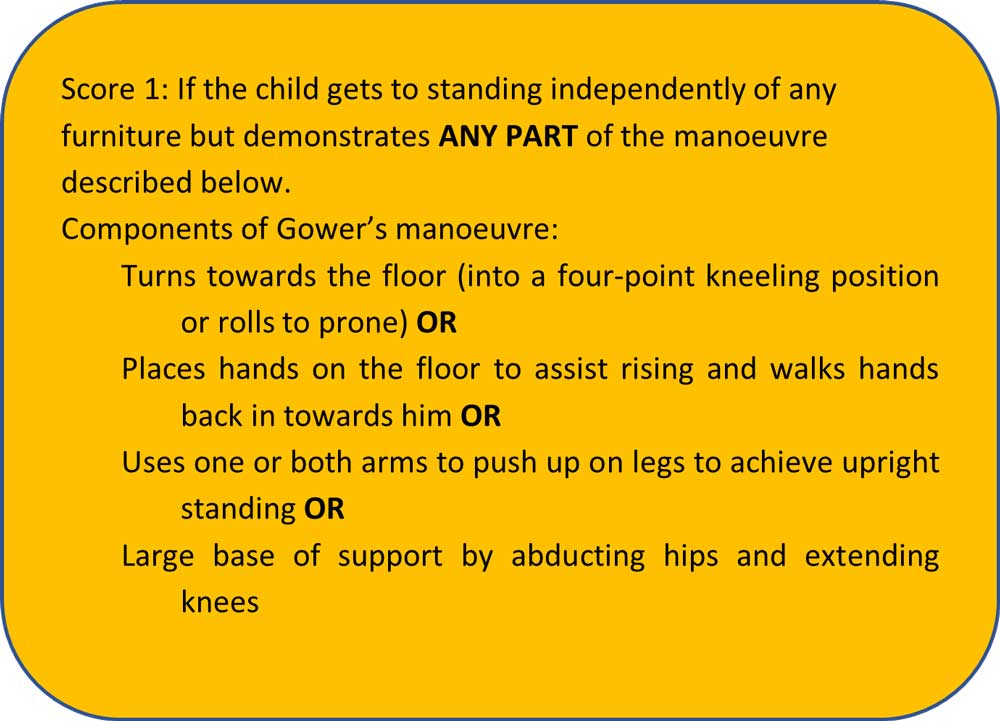
  • What is Gower’s manoeuvre?  

Other useful links for physiotherapists:

  • Muscular Dystrophy UK resources
  • APCP Guidance on Neuromuscular Disorders in Children
  • TREAT NMD and Duchenne

Primary Sidebar

  • Becker Muscular Dystrophy (BMD)
    • Intro to BMD
    • Key Management: BMD
    • Key Assessment Guide: BMD
  • Congenital Muscular Dystrophy (CMD)
    • Intro to CMD
    • Key Management: CMD
    • Key Assessment Guide: CMD
  • Congenital Myasthenic Syndromes (CMS)
    • Intro to CMS
    • Key Management: CMS
    • Key Assessment Guide: CMS
  • Congenital Myopathies (CM)
    • Intro to CM
    • Key Management: CM
    • Key Assessment Guide: CM
  • Duchenne Muscular Dystrophy (DMD)
    • Intro to DMD
    • Key Management DMD
    • Key Assessment Guide: DMD
  • General Neuromuscular Diseases (NMD)
    • Intro to NMD
    • Key Management: NMD
    • Key Assessment Guide: NMD
  • Glycogen Storage (GS)
    • Intro to GSD
    • Key Management: GSD
    • Key Assessment Guide: GSD
  • Inherited Neuropathies
    • Intro to Inherited Neuropathies
    • Key Management: Inherited Neuropathies
    • Key Assessment Guide: Inherited Neuropathies
  • Limb Girdle Muscular Dystrophy (LGMD)
    • Intro to LGMD
    • Key Management: LGMD
    • Key Assessment Guide: LGMD
  • Myotonic Dystrophy (DM1)
    • Intro to DM1
    • Key Management: DM1
    • Key Assessment Guide: DM1
  • Spinal Muscular Atrophy (SMA)
    • Intro to SMA
    • Key Management: SMA
    • Key Assessment Guide: SMA

Footer

POD-NMD Logo

Links

Home
Who we are
Resources by condition
Assessment
Managing NMD
CPD Resources
Podcasts

Resources

POD-NMD LMS Login

Contact

Email: podnmd@treat-nmd.org

POD-NMD Privacy Policy POD-NMD LMS Privacy Policy Sitemap © POD-NMD 2026
  • Who We Are
    • Our Team & Governance
    • Partnerships & Collaborations
  • Resources by Condition
    • Becker Muscular Dystrophy (BMD)
      • Intro to BMD
    • Congenital Muscular Dystrophy (CMD)
      • Intro to CMD
      • Key Management: CMD
      • Key Assessment Guide: CMD
    • Congenital Myasthenia Syndrome (CMS)
      • Intro to CMS
      • Key Management: CMS
      • Key Assessment Guide: CMS
    • Congenital Myopathies (CM)
      • Intro to CM
      • Key Management: CM
      • Key Assessment Guide: CM
    • Duchenne Muscular Dystrophy (DMD)
      • Intro to DMD
      • Key Management: DMD
      • Key Assessment Guide: DMD
    • General Neuromuscular Diseases (NMD)
      • Intro to NMD
      • Key Management: NMD
      • Key Assessment Guide: NMD
    • Glycogen Storage (GSD)
      • Intro to GSD
      • Key Management: GSD
      • Key Assessment Guide: GSD
    • Inherited Neuropathies
      • Intro to Inherited Neuropathies
      • Key Management: Inherited Neuropathies
      • Key Assessment Guide: Inherited Neuropathies
    • Limb Girdle Muscular Dystrophy (LGMD)
      • Intro to LGMD
      • Key Management: LGMD
      • Key Assessment Guide: LGMD
    • Myotonic Dystrophy (DM1)
      • Intro to DM1
      • Key Management of DM1
      • Key Assessment Guide: DM1
    • Spinal Muscular Atrophy (SMA)
      • Intro to SMA
      • Key Management: SMA
      • Key Assessment Guide: SMA
  • Assessment
    • Motor Performance
      • NSAA
      • PUL 2.0
      • EK2
      • NSAD
      • RHS
      • HFMSE
      • RULM
      • ATEND
      • CHOP-INTEND
      • MFM
      • GMFM
      • TANS
      • CMS Specific Assessments
      • QMFT
      • GSGC
    • PROMS
      • ACTIVLIM
      • Egen Klassifikation
      • PROM-Upper
      • Myasthenia Gravis
      • Pompe R-PAct
      • Sleepiness
      • Satisfaction with Orthotic Provision
      • QOLgNMD
      • DMD-QoL
    • Timed Tests
      • Timed 10 Metre Walk/Run
      • Timed Rise From Floor
      • 6 Minute Walk Test
      • Timed Up & Go
      • 100 Metre Walk/Run Test
    • Additional Considerations
      • Respiratory Function
      • Pain
      • Posture & Spine
      • Strength
      • Quality of Life
      • Activity and Fatigue
      • Range of Motion
    • Assessing Babies and Young Children
      • Normal/Abnormal Development
      • Developmental Milestones
      • HINE
      • AIMS
      • BSID
      • CHOP-INTEND for Infants
    • Summary of Function Scales
      • Brooke Upper Extremity Grade
      • Vignos Lower Extremity Grade
      • DMDSAT
      • SOFT
  • Managing NMD
    • Staying Active & Stretches
      • Staying Active
      • Stretches
      • Jaw Tightness (Trismus)
      • Scoliosis Management
    • Managing Other Symptoms
      • Falls Management
      • Fatigue Management
      • Pain Management
      • Respiratory Management
      • Continence Care
      • Oedema Management
    • Multidisciplinary Care
      • Orthopaedic Management
      • Additional Multidisciplinary Management
      • Orthotics
      • Equipment Ideas
    • Occupational Therapy
      • Overview of Role
      • Home Adjustments
      • Mobility Aids and Wheelchairs
      • Support for Sitting
      • Mobile Arm Supports
      • Robotics
  • CPD Resources
  • Podcasts
    • Duchenne Muscular Dystrophy (DMD)
    • Inherited Neuropathies
    • Limb Girdle Muscular Dystrophy (LGMD)
    • Other
  • Search