Overview of Role
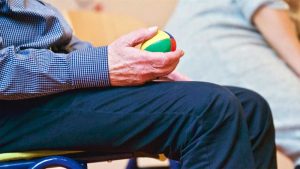
An individual with a neuromuscular disorder is very likely to encounter loss of functional ability or activity as a result of their muscle weakness and disease progression. If a child is unable to get up off the floor, losing this ability will mean they cannot rise from a fall in a playground or if an adult loses the ability to bring a hand to their mouth, they will lose the ability to feed themselves. Different neuromuscular disorders lead to different patterns of functional loss. However, the guiding principle is to maintain and improve independence.
We know that neuromuscular disease leads to impairments in body function such as muscle weakness, contractions or scoliosis which then leads to limitations in basic activities such as walking, sitting, and reaching but this also impacts more complex activities such as toileting eating and drinking. These limitations then further restrict participation in social life such as going to school, doing sports, or attending work. We know that family factors also play a role and can impact social participation. For several neuromuscular diseases, guidelines for management exist which offers some guidance on occupational interventions and these guidelines can also be useful for other neuromuscular disorders.
The chapter of this book offers some good guidance on OT for children with NMD: – ‘Occupational Therapy and Robotics’ by Imelda de Groot – Neuromuscular disorders in children. A multidisciplinary approach to management. Clinics in developmental medicine. Mac Keith press.