• Skip to primary navigation
  • Skip to main content
  • Skip to primary sidebar
  • Skip to footer
POD-NMD Logo

Pod NMD

  • Who We Are
    • Our Team & Governance
    • Partnerships & Collaborations
  • Resources by Condition
    • Becker Muscular Dystrophy (BMD)
    • Congenital Muscular Dystrophy (CMD)
    • Congenital Myasthenia Syndrome (CMS)
    • Congenital Myopathies (CM)
    • Duchenne Muscular Dystrophy (DMD)
    • General Neuromuscular Diseases (NMD)
    • Glycogen Storage (GSD)
    • Inherited Neuropathies
    • Limb Girdle Muscular Dystrophy (LGMD)
    • Myotonic Dystrophy (DM1)
    • Spinal Muscular Atrophy (SMA)
  • Assessment
    • Motor Performance
    • PROMS
    • Timed Tests
    • Additional Considerations
    • Assessing Babies and Young Children
    • Summary of Function Scales
  • Managing NMD
    • Staying Active & Stretches
    • Managing Other Symptoms
    • Multidisciplinary Care
    • Occupational Therapy
  • CPD Resources
  • Podcasts
    • Duchenne Muscular Dystrophy (DMD)
    • Inherited Neuropathies
    • Limb Girdle Muscular Dystrophy (LGMD)
    • Other
  • Search

Scoliosis Management
/ Home / Scoliosis Management

Scoliosis Management

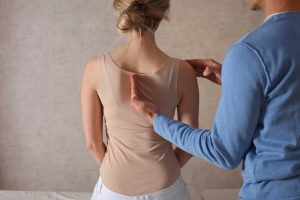
The development of spinal deformities is a significant problem in the disease course of neuromuscular disorders and requires a comprehensive and multidisciplinary approach. Neuromuscular scoliosis behaves somewhat differently from the idiopathic forms of scoliosis. Each disease has its own characteristics and even within the same neuromuscular disorder the curve can behave differently depending on the age of onset and the age of the individual. The typical curve pattern in neuromuscular disease is a long C-shaped collapsing kyphoscoliosis with pelvic obliquity which means the pelvis is not in a perfect horizontal position. However, an S-shaped type is often observed in some patients such as Duchenne muscular dystrophy and Charcot Marie Tooth.

The management of scoliosis in NMD requires a multidisciplinary approach and may include medication, bracing, spinal fusion and growing rods. The goal of any management of scoliosis is to prevent progression and restore sitting balance and the use of the upper limbs to improve quality of life. For example, a spinal jacket will not necessarily delay the progression of a scoliosis in a disease such as spinal muscular atrophy but may give sufficient trunk support to allow the individual to use their arms for functional activities of daily living rather than propping themselves in a sitting position.

More information on the management of paediatric neuromuscular scoliosis can be found in the book “Neuromuscular disorders in children” in Clinics in Developmental Medicine, Mac Keith Press. Edited by Nicholas Deconnick and Natalie Goemans.

Posture is something that physiotherapists refer to quite a lot and posture can be influenced by pain, muscle weakness and muscle activity. Posture refers to the way you hold yourself up against gravity and the position you adopt when you’re standing or sitting or lying down. Posture is not just about static positions but also dynamic activities such as walking running and moving in a wheelchair. In many neuromuscular disorders muscle weakness impacts posture.

Resources on Postural Management

This leaflet from the Scottish Muscle Network offers advice around postural management in standing, sitting, in wheelchairs and when lying and is a useful leaflet to pass on to patients. Information on postural management

Primary Sidebar

  • Staying Active & Stretches
    • Staying Active
    • Jaw Tightness (Trismus)
    • Scoliosis Management
    • Stretches
  • Managing Other Symptoms
    • Continence Care
    • Falls Management
    • Fatigue Management
    • Oedema Management
    • Pain Management
    • Respiratory Management
  • Multidisciplinary Care
    • Additional Multidisciplinary Management
    • Equipment Ideas
    • Orthopaedic Management
    • Orthotics
  • Occupational Therapy
    • Overview of Role
    • Home Adjustments
    • Mobile Arm Supports
    • Mobility Aids and Wheelchairs
    • Robotics
    • Support for Sitting
    • Advice on clothing
  • Patient Leaflets
    • For women

Footer

POD-NMD Logo

Links

Home
Who we are
Resources by condition
Assessment
Managing NMD
CPD Resources
Podcasts

Resources

POD-NMD LMS Login

Contact

Email: podnmd@treat-nmd.org

POD-NMD Privacy Policy POD-NMD LMS Privacy Policy Sitemap © POD-NMD 2026
  • Who We Are
    • Our Team & Governance
    • Partnerships & Collaborations
  • Resources by Condition
    • Becker Muscular Dystrophy (BMD)
      • Intro to BMD
    • Congenital Muscular Dystrophy (CMD)
      • Intro to CMD
      • Key Management: CMD
      • Key Assessment Guide: CMD
    • Congenital Myasthenia Syndrome (CMS)
      • Intro to CMS
      • Key Management: CMS
      • Key Assessment Guide: CMS
    • Congenital Myopathies (CM)
      • Intro to CM
      • Key Management: CM
      • Key Assessment Guide: CM
    • Duchenne Muscular Dystrophy (DMD)
      • Intro to DMD
      • Key Management: DMD
      • Key Assessment Guide: DMD
    • General Neuromuscular Diseases (NMD)
      • Intro to NMD
      • Key Management: NMD
      • Key Assessment Guide: NMD
    • Glycogen Storage (GSD)
      • Intro to GSD
      • Key Management: GSD
      • Key Assessment Guide: GSD
    • Inherited Neuropathies
      • Intro to Inherited Neuropathies
      • Key Management: Inherited Neuropathies
      • Key Assessment Guide: Inherited Neuropathies
    • Limb Girdle Muscular Dystrophy (LGMD)
      • Intro to LGMD
      • Key Management: LGMD
      • Key Assessment Guide: LGMD
    • Myotonic Dystrophy (DM1)
      • Intro to DM1
      • Key Management of DM1
      • Key Assessment Guide: DM1
    • Spinal Muscular Atrophy (SMA)
      • Intro to SMA
      • Key Management: SMA
      • Key Assessment Guide: SMA
  • Assessment
    • Motor Performance
      • NSAA
      • PUL 2.0
      • EK2
      • NSAD
      • RHS
      • HFMSE
      • RULM
      • ATEND
      • CHOP-INTEND
      • MFM
      • GMFM
      • TANS
      • CMS Specific Assessments
      • QMFT
      • GSGC
    • PROMS
      • ACTIVLIM
      • Egen Klassifikation
      • PROM-Upper
      • Myasthenia Gravis
      • Pompe R-PAct
      • Sleepiness
      • Satisfaction with Orthotic Provision
      • QOLgNMD
      • DMD-QoL
    • Timed Tests
      • Timed 10 Metre Walk/Run
      • Timed Rise From Floor
      • 6 Minute Walk Test
      • Timed Up & Go
      • 100 Metre Walk/Run Test
    • Additional Considerations
      • Respiratory Function
      • Pain
      • Posture & Spine
      • Strength
      • Quality of Life
      • Activity and Fatigue
      • Range of Motion
    • Assessing Babies and Young Children
      • Normal/Abnormal Development
      • Developmental Milestones
      • HINE
      • AIMS
      • BSID
      • CHOP-INTEND for Infants
    • Summary of Function Scales
      • Brooke Upper Extremity Grade
      • Vignos Lower Extremity Grade
      • DMDSAT
      • SOFT
  • Managing NMD
    • Staying Active & Stretches
      • Staying Active
      • Stretches
      • Jaw Tightness (Trismus)
      • Scoliosis Management
    • Managing Other Symptoms
      • Falls Management
      • Fatigue Management
      • Pain Management
      • Respiratory Management
      • Continence Care
      • Oedema Management
    • Multidisciplinary Care
      • Orthopaedic Management
      • Additional Multidisciplinary Management
      • Orthotics
      • Equipment Ideas
    • Occupational Therapy
      • Overview of Role
      • Home Adjustments
      • Mobility Aids and Wheelchairs
      • Support for Sitting
      • Mobile Arm Supports
      • Robotics
  • CPD Resources
  • Podcasts
    • Duchenne Muscular Dystrophy (DMD)
    • Inherited Neuropathies
    • Limb Girdle Muscular Dystrophy (LGMD)
    • Other
  • Search